Sophisticated Gin-Soaked Cherry Ice Cream Recipe
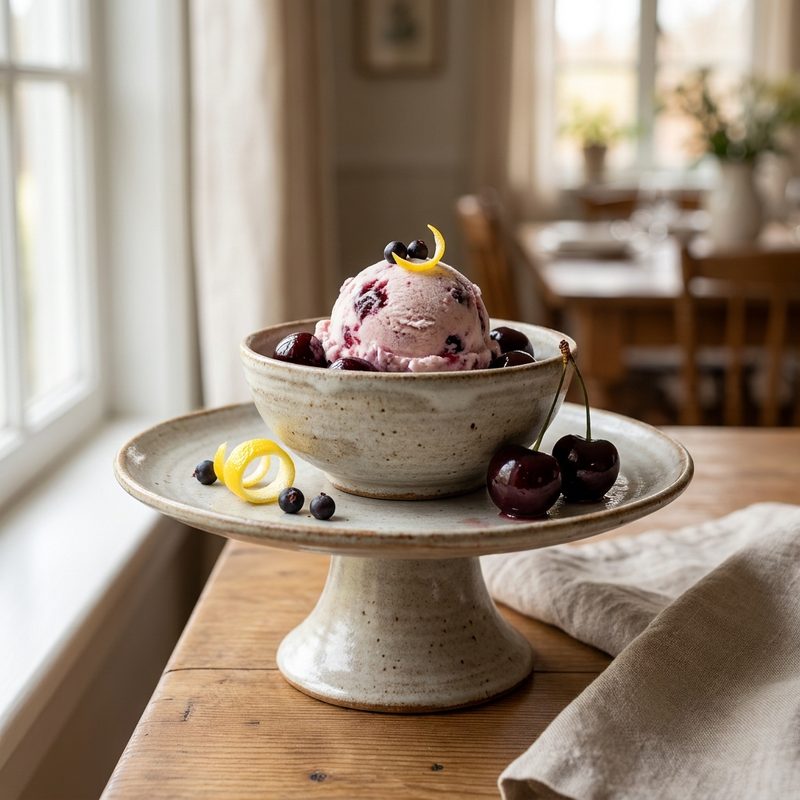
This sophisticated dessert combines the herbal notes of a premium London Dry gin with the tart sweetness of dark macerated cherries. The custard base is incredibly smooth, providing a luxurious backdrop for the boozy fruit bursts in every spoonful.
- Prep
- 20 min
- Bake
- 15 min
- Serves
- 4
- Level
- Intermediate
- Per serving
- 480 kcal
Method
Combine the pitted cherries, gin, and 2 tablespoons of the sugar in a bowl. Cover and let macerate in the refrigerator for at least 4 hours, or overnight.
In a medium saucepan, combine the heavy cream, milk, half of the remaining sugar, salt, and the vanilla bean (seeds and pod). Heat over medium heat until it just begins to simmer, then remove from heat.
In a separate bowl, whisk the egg yolks with the remaining sugar until pale and slightly thickened.
Slowly temper the yolks by drizzling in one cup of the warm cream mixture while whisking constantly. Pour the yolk mixture back into the saucepan with the remaining cream.
Cook over low heat, stirring constantly with a wooden spoon, until the custard thickens enough to coat the back of the spoon (approx. 170°F/77°C). Do not boil.
Strain the custard through a fine-mesh sieve into a clean bowl. Chill thoroughly in an ice bath or refrigerator.
Strain the cherries, reserving the gin liquid. Stir 3 tablespoons of the cherry-infused gin liquid into the cold custard.
Churn the custard in your ice cream maker according to the manufacturer's instructions. During the last 2 minutes of churning, add the gin-soaked cherries.
Transfer to a chilled container and freeze for at least 4 hours to firm up.
Notes from the kitchen
Use a gin with strong botanical or citrus notes to cut through the richness of the dairy.
Don't add all the macerating liquid to the base, as too much alcohol will prevent the ice cream from freezing properly.
Ensure your ice cream bowl is frozen for at least 24 hours before starting for the best texture.
Chop the cherries into smaller pieces if you prefer a more even distribution throughout the scoop.