Baking with Gin Botanicals: A Guide to Flavor, Balance, and Technique
Go beyond the liquid and bring the complex, aromatic profile of gin directly into your oven. This guide explores how to prep and balance raw gin botanicals like juniper and angelica to create sophisticated, professional-grade pastries.
Understanding Your Botanical Profile
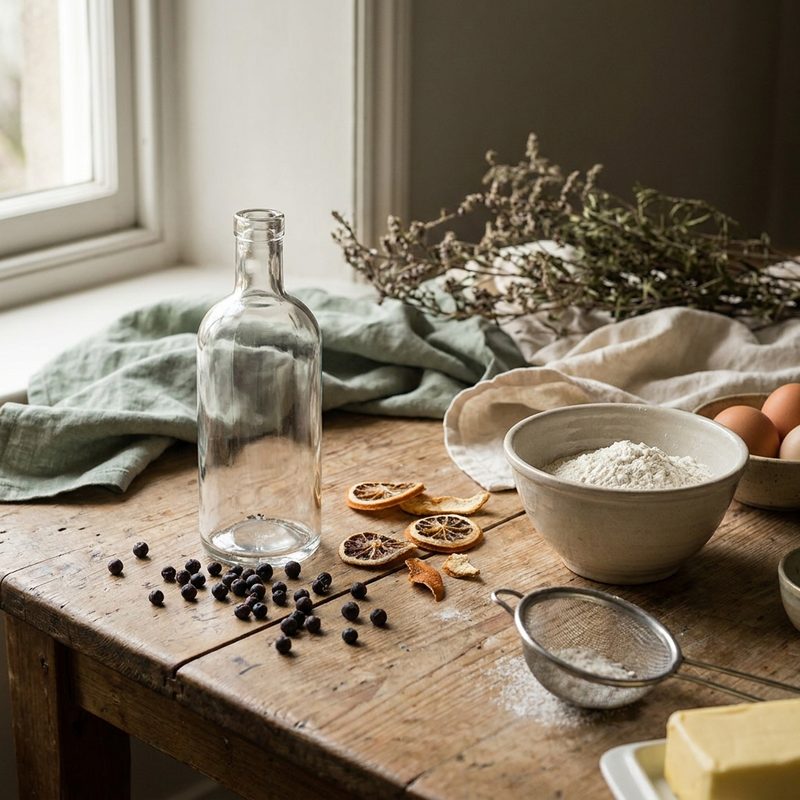
Before you begin, you must understand the 'Big Four' of gin: juniper, coriander seed, angelica root, and citrus peel. Juniper provides the piney, resinous backbone; coriander seed offers a citrusy, floral bridge; angelica root adds an earthy, musky depth; and citrus peel brings the bright, high notes. Each behaves differently when exposed to heat, so treat them as a spice blend rather than a single ingredient.
Preparation: Grinding and Toasting
Never use botanicals whole in a bake, as they are too fibrous. For the best flavor release, lightly toast your coriander seeds and juniper berries in a dry pan over medium heat until fragrant (about 2 minutes). Once cooled, use a mortar and pestle or a dedicated spice grinder to turn them into a fine powder. For angelica root, which is incredibly tough, ensure you buy it pre-ground or use a high-speed grinder to avoid woody fragments in your crumb.
The Art of Balancing Power
The biggest mistake in gin-botanical baking is overusing juniper. Juniper contains powerful essential oils that can quickly turn a cake into something that tastes like soap or perfume. Start with a ratio: for a standard loaf cake, use no more than 1/2 teaspoon of ground juniper. You can be more generous with coriander (up to 1.5 teaspoons), which acts as a flavor enhancer for other spices like ginger or cinnamon.
Infusion vs. Direct Dry Addition
There are two primary ways to incorporate these flavors. The 'Direct Method' involves whisking the finely ground botanicals into your flour. This provides speckles of flavor and a rustic aesthetic. The 'Infusion Method' involves heating the botanicals in the fat (butter or oil) used in the recipe. This method extracts a more rounded, mellow flavor and is ideal for silky textures like ganache or buttercream where you want the flavor without the grit.
Executing the Bake
When adding your prepared botanicals to a batter, do so during the creaming stage. If you are using citrus peel, rub it into the sugar first to release the oils. Bake at a slightly lower temperature (around 325°F to 350°F) to prevent the volatile oils in the juniper from becoming bitter. This slower bake allows the woody notes of the angelica to harmonize with the sweetness of the sugar.